
Services & treatment techniques

The right method.
At the right time.

Treatment is more than a list of techniques. We select and combine appropriate methods around your assessment, response and functional goals.

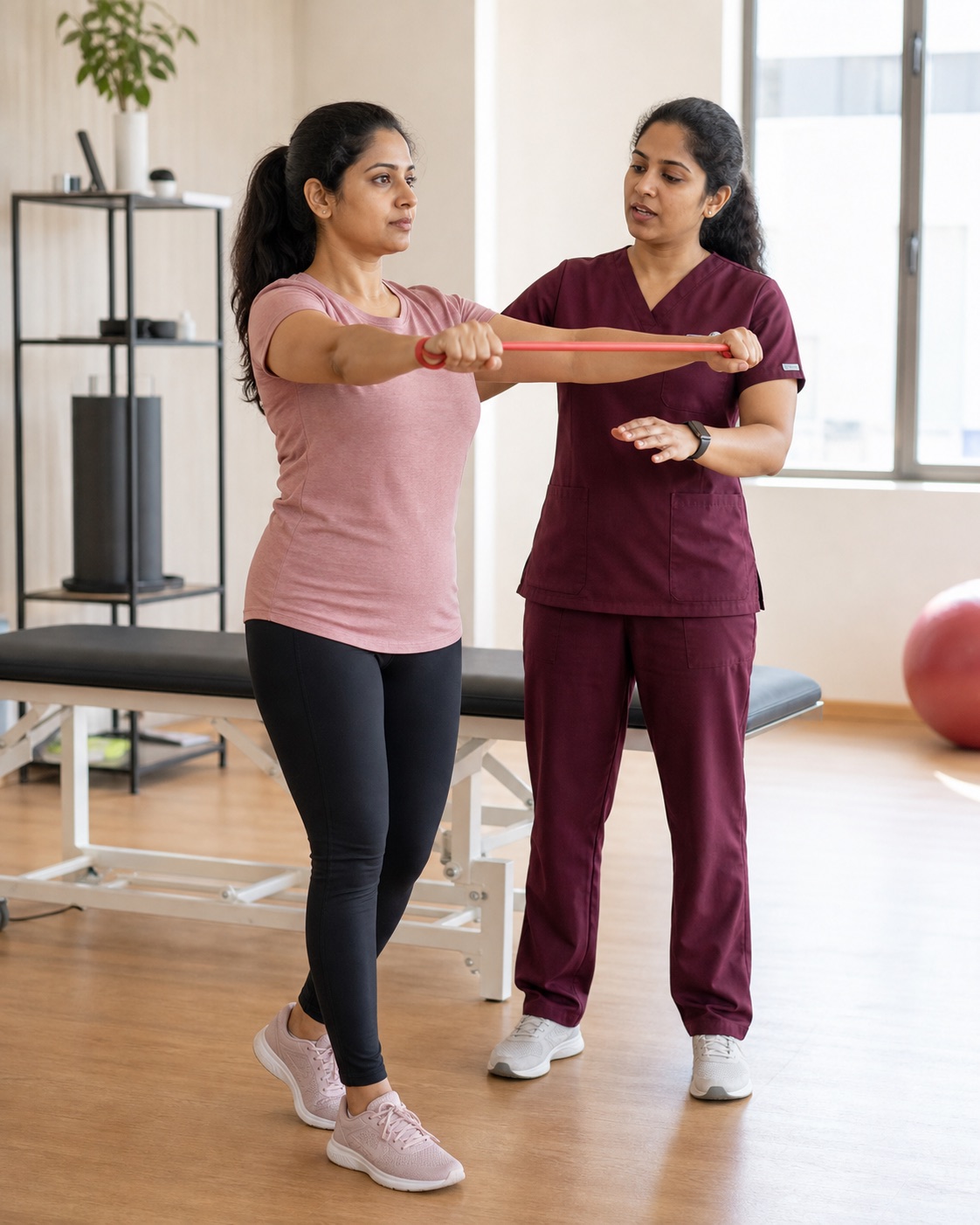
A physiotherapist coaching a patient through a controlled resistance-band exercise

CLINICAL REASONING FIRST

Tools support the plan.
They are not the plan.

Techniques are used where clinically appropriate and adjusted as you progress. Active rehabilitation, education and self-management remain central to building capacity beyond the clinic.

01

Hands-on care

Manual therapy

Targeted hands-on techniques may be used to improve comfort and movement when assessment shows they are appropriate.

  • Maitland and Mulligan mobilisation
  • Joint manipulation
  • Muscle energy techniques
  • Positional release and trigger-point therapy
  • Dry needling
  • Cupping therapy
02

Regulation and recovery

Nervous-system techniques

Simple regulation strategies can complement physical rehabilitation when stress, sleep or persistent pain affects recovery.

  • Breathwork
  • Non-sleep deep rest
  • Mindfulness-based strategies
  • Polyvagal-informed education
03

Capacity and confidence

Movement rehabilitation

Progressive exercise retrains movement, develops capacity and connects clinic gains with everyday activity and sport.

  • Muscle retraining and re-education
  • Neuromuscular training
  • Core activation and strengthening
  • Pilates-based exercise
  • Kinesio taping
  • PNF techniques
  • Neurodynamics and dural mobility
04

Selected adjuncts

Electrotherapy

Physical modalities may be used as short-term adjuncts within an active rehabilitation plan—not as a substitute for movement.

  • Thermotherapy
  • Cold therapy
  • Therapeutic ultrasound
  • Interferential therapy
  • TENS
05

Orientation and control

Posture and vestibular care

Individual assessment guides strategies for posture, balance, dizziness and confident movement through different environments.

  • Posture assessment and retraining
  • Workstation and movement advice
  • Balance rehabilitation
  • Vestibular rehabilitation
06

Breathing and airway care

Respiratory physiotherapy

Breathing and chest-care techniques support airway clearance, ventilation and gradual return to activity when clinically indicated.

  • Chest physiotherapy
  • Breathing control
  • Airway-clearance techniques
  • Graded mobility and conditioning

A note on suitability

Every technique is considered in the context of your health, symptoms and goals. Assessment may identify a need to modify treatment or seek medical review before physiotherapy proceeds.

LET’S FIND YOUR NEXT STEP

Assessment first.
Progress from there.

Request an appointment and the team will confirm your preferred slot on WhatsApp.